
The Spring Festival Notice From Shichuang
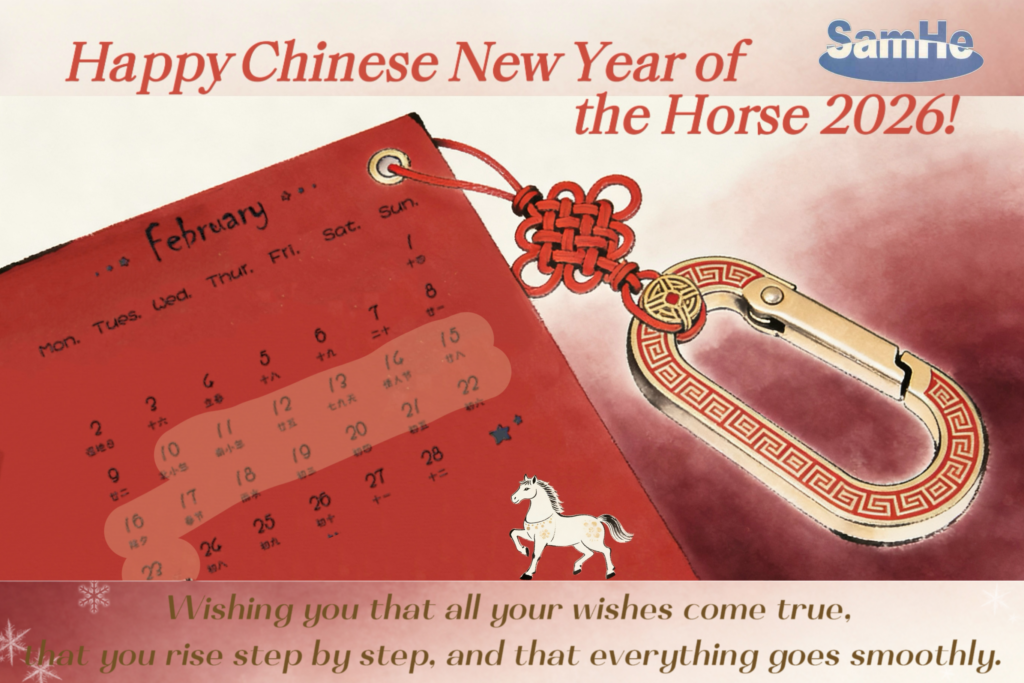
Happy Year of the Horse 2026!
With the Spring Festival approaching, the entire team at Shichuang extends our warmest early greetings to you. We would like to express our sincere gratitude for your trust and collaboration throughout 2025. It has been a pleasure working with you.
Please be informed of our holiday arrangements:
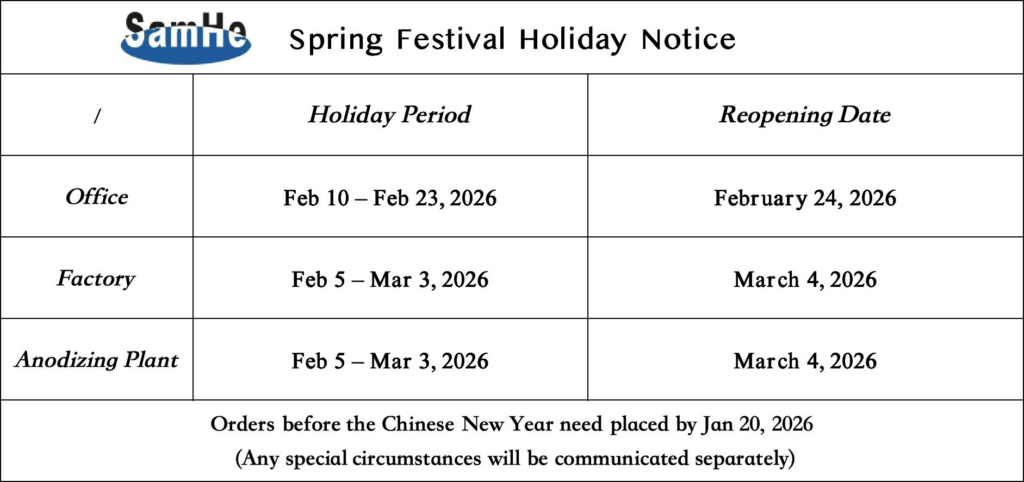
If you have any projects during this period, please feel free to contact me, and we will arrange the production schedule. Produce after the New Year make your project run smoothly.
Our responses may be slightly delayed. For any urgent matters, please contact us by email: sabrina@samhe.com or WhatsApp: 8613712945262.
We wish you a prosperous and joyful Year of the Horse!
So what is the Spring Festival?
The Spring Festival, also known as the Lunar New Year, is the grandest traditional festival in China. The Spring Festival has a long history and can be traces back to thr ancient time, when people worshiped the Heaven at the beginning of the lunar year, an activity first recorded in the Western Han Dynasty(202BC=8AD).
From then on, the customs were widely spread and came in many forms. There are many celebrations during the festival, such as worshiping the Heaven and ancestors, staying up all night on New Year’s Eve to welcome the coming new year, paying New Year visits, setting off fireworks and firecrackers, and enjoying the lion dance.
When the festival is drawing near, Chinese people who have left their hometown will manage to return home to celebrate the New Year’s Eve with their family. During the festival, people pay a visit or give a greeting call to their friends and relatives. The celebration may start from the twenty-third day of the twelfth lunar month until the Lantern Festival(the fifteenth day of the first lunar month), during which celebrations are quite different each day.
The Spring Festival is the best time for Chinese to reunite, a grand ceremony combined by worshiping, celebrating and entertainment, and a symbol of profound Chinese culture. It has inherited rich historical and cultural deposits, and embodies the essence of traditional Chinese culture.
In 2006, the Chinese State Council included the Spring Festival in the country’s first list of Intangible Cultural Heritage. Since 1949, Chinese people have enjoyed the annual public holiday of the Spring Festival.
The Legend of the Nian Beast:
One legend tells of a monster called “Nian” that lived deep in the sea and only came ashore on New Year’s Eve. People fled to the mountains to escape the beast’s harm.
One New Year’s Eve, an old man came from outside the village and told them how to drive away the Nian beast. It turned out that Nian was most afraid of red, fire, and loud noises.
From then on, every New Year’s Eve, families would put up red couplets, set off firecrackers, and keep their homes brightly lit with candles, staying up all night to welcome the new year. Early on New Year’s Day, people would visit relatives and friends to exchange greetings.
This custom spread far and wide, eventually becoming the Spring Festival.