
How Better Connectors Improve Winter Gear Experience
In winter gear design, most attention is placed on insulation, materials, and weather protection. Small hardware components are often treted as secondary details. Yet in actual use, especially in cold environments, these components often shape how a product is handled, adjusted, and relied on.
Connectors used on gloves, backpacks, and accessories are a typical example. They are simple in appearance, but they sit at the point where usability, durability, and user confidence meet.

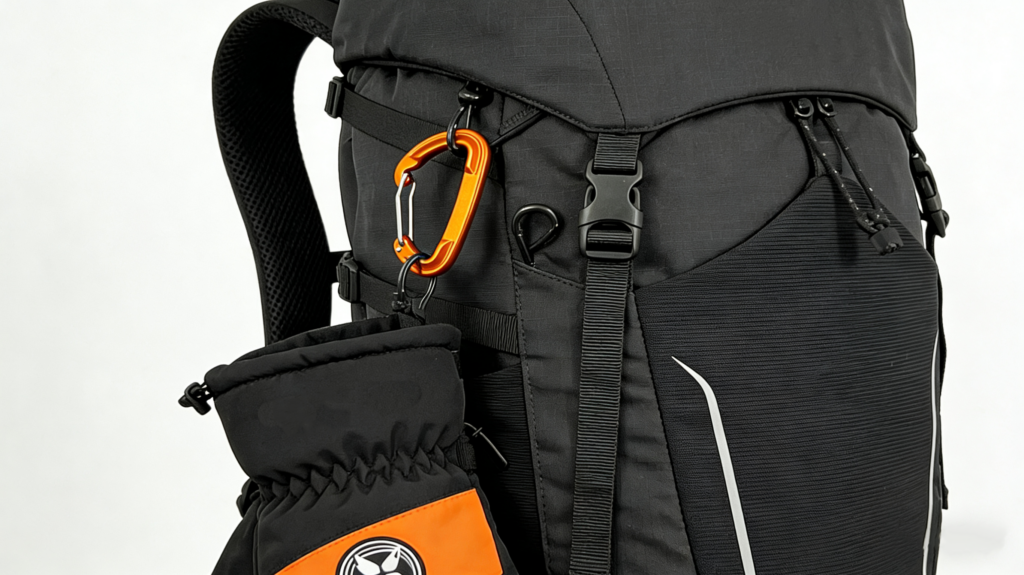
An open-ended hook provides speed, but it depends on how securely the item is positioned. During movement, such as skiing, hiking, or general outdoor use, there is a higher chance of unintended disengagement, especially when the connection point is frequently in motion.
A carabiner-style connector approaches the same task differently. Instead of relying only on placement, it introduces a controlled opening and closing mechanism. This allows the user to actively secure the connection, even when operating with limited dexterity.
From a design perspective, this creates several functional differences:
- A defined load direction improves stability during movement
- The gate provides tactile feedback when closing
- The connection remains more consistent under dynamic use
- The operation becomes more predictable when wearing gloves
- These changes are subtle, but they influence how confidently a user interacts with the product over time.
Material selection further affects how connectors perform in winter conditions. Aluminum alloys dominate the market thanks to their ideal balance of weight, corrosion resistance, and processing flexibility. Consequently, manufacturers build many standard accessory hooks from 6061 aluminum to ensure excellent manufacturability and cost control.
For applications that involve more frequent handling, repeated loading, or higher expectations for durability, higher-strength alloys such as 7075 are often considered. With a significantly higher strength-to-weight ratio, 7075 allows the connector to maintain a lightweight profile while providing greater structural stability.
In practical terms, this can support:
stronger structural sections
improved resistance to deformation over time
more consistent performance under repeated use
Reflects how different materials align with different product requirements and positioning.
A connector that performs smoothly at room temperature may behave differently in low temperatures, which is why these small adjustments are often part of product refinement.
For winter gear brands, carabiner selection is less about choosing a single solution and more about matching hardware to usage scenarios.
· Open hooks remain effective for quick attachment and lightweight applications
· Controlled connectors offer more stability in dynamic
· Higher-strength materials can support more refined designs and long-term durability expectations
Small hardware components are among the few parts of a product that users interact with repeatedly. Over time, these interactions shape the overall perception of quality and usability. Adjustments at this level are often not immediately visible, but they can significantly influence how a product performs in real conditions.
If you are reviewing existing designs or developing new winter gear, you can evaluate connector structures and material selections based on actual usage scenarios rather than standard configurations.
Our factory works with brands to develop aluminum connectors using different alloys, including 7075, depending on product positioning and performance requirements. Samples and design suggestions can be provided based on your application.
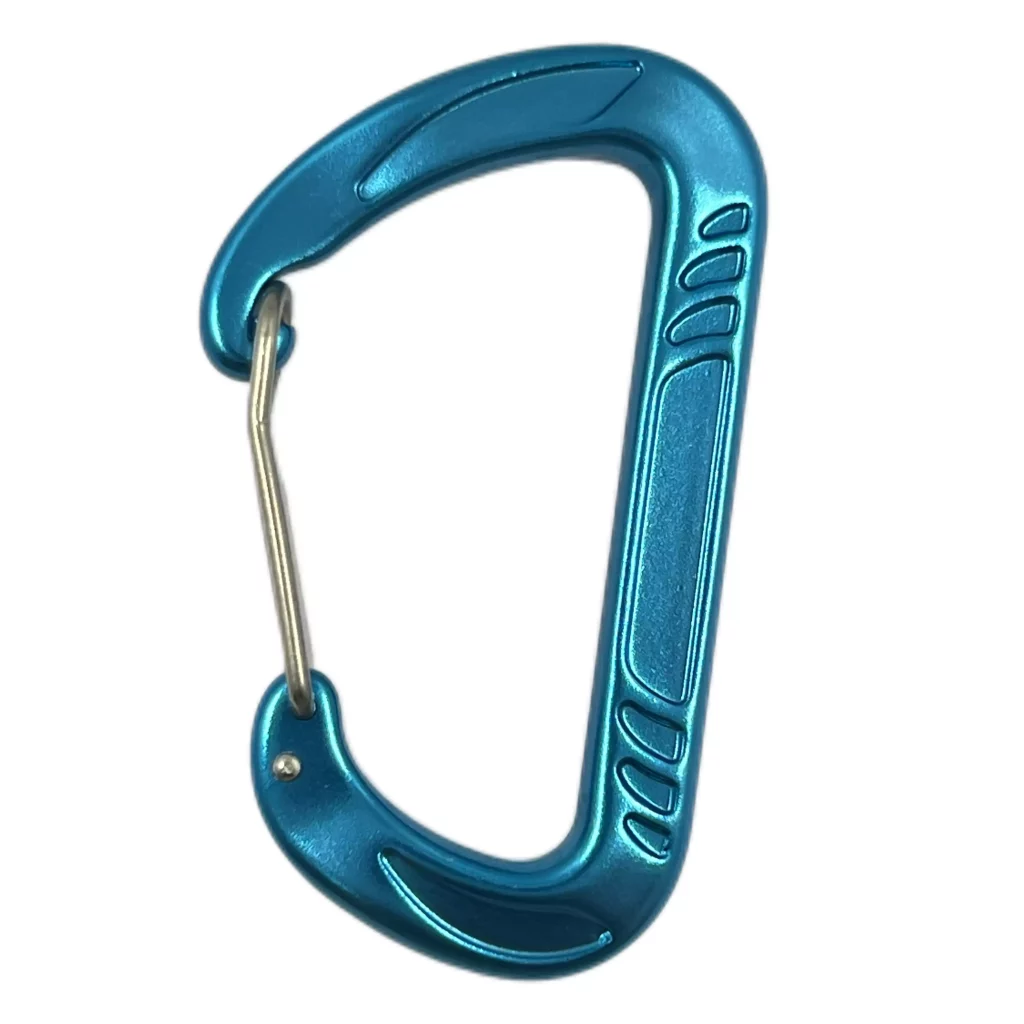
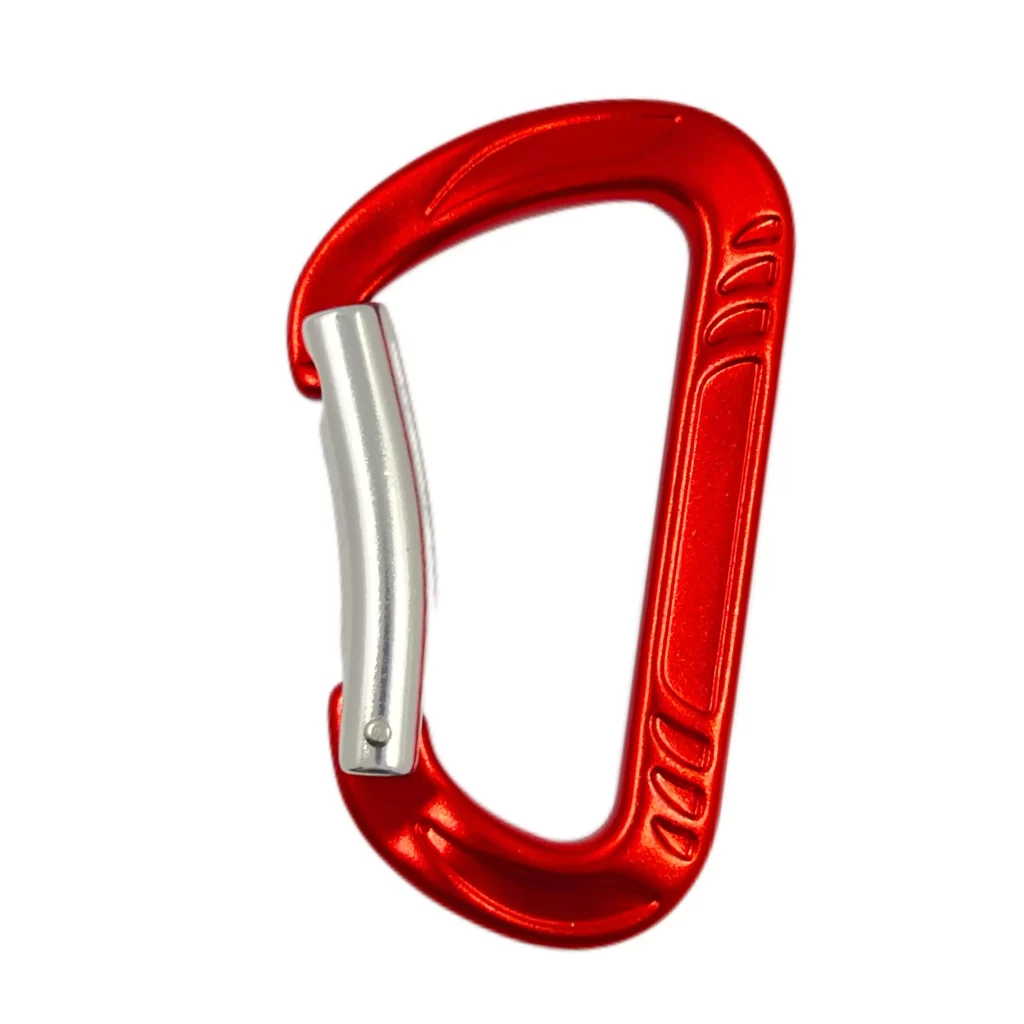
Below are the carabiners which are suitable for Winter Gear:
How To Cooperate With Us?
Please send your samples or drawings to our company.We will always provide the best solution for your projects.
Our address:
No.3, Huafu Road, Shangsha Sixth Industrial Zone, Chang’an Town, Dongguan, Guangdong, China
Phone Number:
E-mail: