
Climbing Wall Equipment Guide: Hardware, Carabiners & Safety Systems for Commercial Climbing Gyms
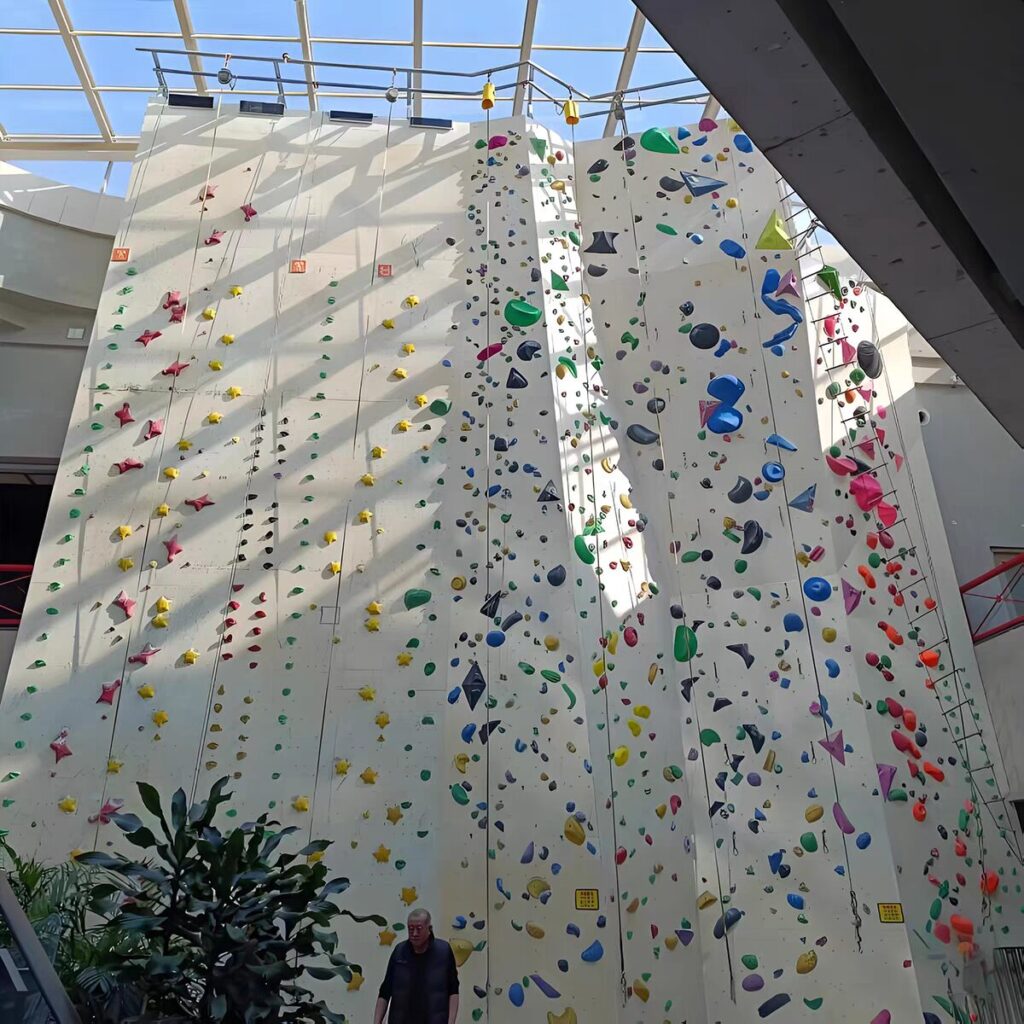
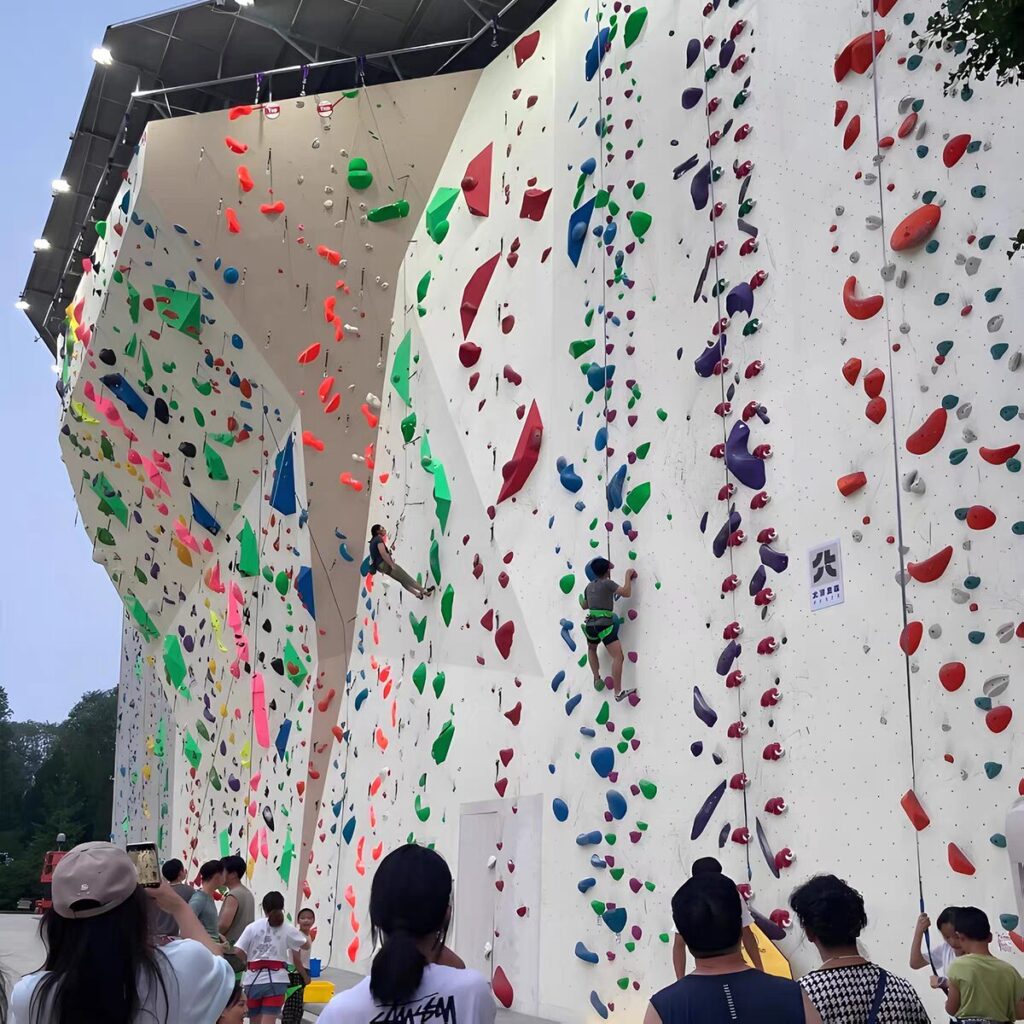
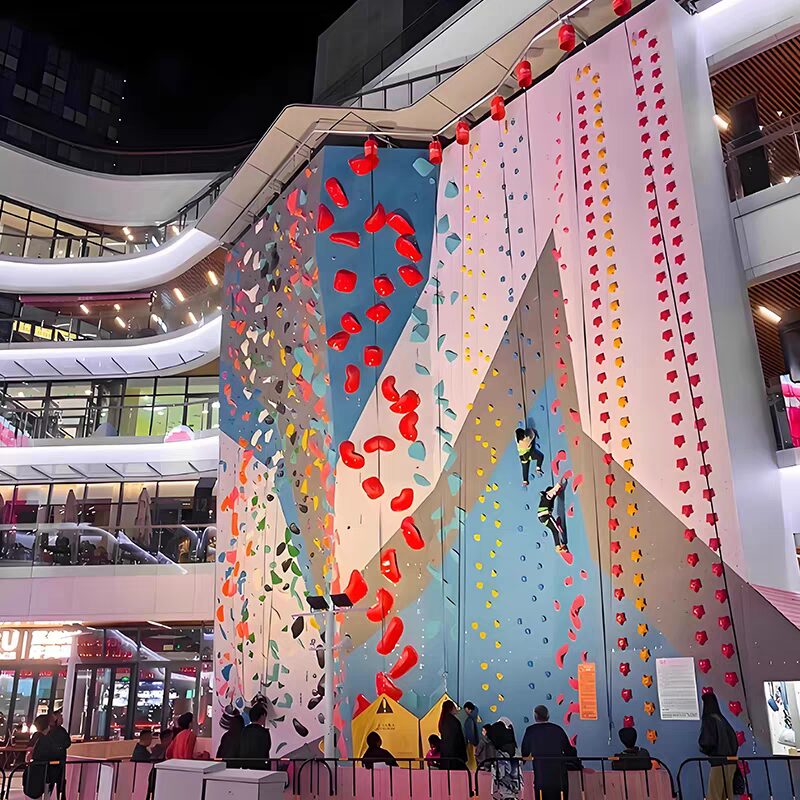
Indoor climbing has developed far beyond a wall covered with climbing holds. A modern commercial climbing gym is a complete system that combines the climbing structure, protection points, ropes, anchors, quickdraws, carabiners, belay equipment and regular inspection procedures.
For climbing wall manufacturers, gym operators and climbing equipment suppliers, selecting the right hardware is particularly important. A carabiner used on a personal sport climbing quickdraw may face very different conditions from one permanently installed on a busy indoor lead wall.
Understanding these differences is the starting point for selecting suitable climbing wall hardware.

What Equipment Is Used on a Commercial Climbing Wall?
The equipment required depends heavily on the type of climbing.
Most commercial indoor climbing facilities include one or more of the following:
- Bouldering
- Top-rope climbing
- Lead climbing
- Auto-belay climbing
Although all belong to the indoor climbing industry, their hardware requirements are different.
Bouldering
Bouldering walls are relatively low and normally use crash mats instead of rope-based protection systems.
The main equipment includes climbing holds, volumes, wall panels, fixing bolts and impact-attenuating flooring.
Because climbers do not normally use ropes or quickdraws while bouldering, life-safety carabiners play a much smaller role here than they do on lead and top-rope walls.
Top-Rope Climbing
In top-rope climbing, the rope passes through a protection system at the top of the climbing wall.
This creates an important requirement: the components at the top of the route can experience repeated rope contact as climbers ascend and are lowered.
For this reason, top-rope systems need to consider more than breaking strength alone. Wear resistance, rope-contact geometry, surface condition and inspection are also important factors.
Lead Climbing
Lead climbing places particularly high demands on climbing wall hardware.
As the climber progresses upward, the rope is clipped into a series of protection points. In commercial climbing gyms, fixed quickdraws are commonly installed on the wall so that climbers do not need to install their own quickdraws.
A typical fixed quickdraw may contain:
Fixed connection → Sling → Positioner → Rope-end carabiner
Unlike a personal quickdraw that is carried by an individual climber, a gym quickdraw may be used repeatedly by many climbers.
That difference has a major influence on material and product design.
Auto-Belay Climbing
Auto-belay systems allow a climber to climb without a human belayer. The climber connects to an automatic belay device that controls the descent.
Because the connector forms part of a safety-critical system, compatibility with the complete auto-belay system and the equipment manufacturer’s instructions is essential.
A carabiner should never be considered suitable for an auto-belay application based only on its kN rating.
What Hardware Is Commonly Used on Climbing Walls?
Different parts of a climbing wall perform different functions, so there is no single connector that is ideal for every position.
| Hardware | Typical Application | Key Considerations |
|---|---|---|
| Climbing carabiner | Quickdraws and climbing systems | Strength, gate function, wear |
| Fixed quickdraw | Indoor lead climbing | Durability, orientation, inspection |
| Quick link | Permanent or semi-permanent connection | Strength, correct loading |
| Top anchor connector | Top-rope systems | Rope wear, contact radius |
| Quickdraw sling | Lead climbing | Strength, abrasion, inspection |
| Carabiner positioner | Fixed quickdraw | Correct orientation |
| Anchor point | Wall protection system | Structural integrity |
The key question should therefore not simply be:
“How many kN does this carabiner hold?”
A better question is:
“Where and how will this carabiner be used?”
What Types of Carabiners Are Used in Climbing Gyms?
You can find Several carabiner designs can in indoor climbing facilities. Their suitability depends on the application.
Steel Bent-Gate Carabiners
Steel bent-gate carabiners are particularly relevant to fixed quickdraws in commercial lead climbing gyms.
The bent gate helps guide the rope during clipping, while steel offers greater resistance to repeated wear than aluminum in many high-frequency applications.
Important design features can include:
- Wide rope-bearing surface
- Smooth, rounded rope-contact area
- Large gate opening
- Bent gate for easier rope clipping
- Snag-resistant nose design
- Stable gate action
- Positioning system to maintain correct orientation
For a commercial gym, these details may be just as important as the maximum breaking strength.
Steel Wire-Gate Carabiners
Wire-gate designs are another option used in climbing applications.
They offer a relatively simple gate structure and can provide a large opening while keeping the gate mechanism compact.
When developed for intensive indoor use, the overall design still needs to consider wear resistance, gate durability, rope-contact geometry and correct loading.
Aluminum Carabiners
Aluminum remains extremely important in climbing.
High-strength aluminum alloys, particularly 7075-series alloys, offer an excellent strength-to-weight ratio. This makes aluminum carabiners especially attractive where low weight matters, including personal sport climbing equipment and lightweight quickdraws.
However, a commercial climbing gym creates a different operating environment.
A fixed rope-end carabiner may experience substantially more repeated rope contact than a personally owned carabiner. In these positions, wear resistance can become more important than saving a few grams of weight.
This is why material selection should be based on the actual application rather than strength alone.
Steel vs. Aluminum Carabiners for Climbing Walls
There is no universal answer to whether steel or aluminum is “better.”
They solve different problems.
| Factor | Aluminum | Steel |
|---|---|---|
| Weight | Lower | Higher |
| Strength-to-weight ratio | Excellent | Good |
| Wear resistance | Lower in many repeated-contact applications | Higher |
| Personal quickdraws | Very suitable | Often unnecessarily heavy |
| High-frequency fixed quickdraws | Application-dependent | Commonly preferred |
| Repeated rope contact | Requires careful wear monitoring | Strong advantage |
| Portability | Excellent | Less important for fixed installation |
For a climber carrying multiple quickdraws outdoors, reducing weight can make a significant difference.
For a quickdraw permanently installed on a climbing wall, however, the operator does not need to carry that weight. Durability and resistance to repeated rope contact may therefore become higher priorities.
Why Are Fixed Quickdraws Different?
A fixed gym quickdraw is not simply an outdoor quickdraw left permanently on a wall.
Commercial gym equipment operates under a different usage pattern.
A personal quickdraw may be used by one climber and inspected by its owner. A fixed gym quickdraw can be clipped repeatedly by many users and remains part of the facility’s equipment inventory.
A typical system may include:
Steel quick link → Quickdraw sling → Positioner → Steel rope-end carabiner
Each component has a specific purpose.
The quick link provides a stable connection to the wall-side protection system. The sling connects the two ends of the system. A positioner helps keep the rope-end carabiner correctly oriented, while the lower carabiner provides the clipping point for the climbing rope.
For gym operators, this means inspection cannot focus only on the carabiner.
Why Rope-Contact Geometry Matters
One of the most overlooked features of a climbing carabiner is the area where the rope actually runs.
Every time a rope moves against a connector, friction occurs.
Over time:
Repeated rope contact → Surface wear → Groove formation → Potential sharp edges → Increased rope wear
This is particularly relevant to high-traffic climbing gyms.
A wider and more rounded rope-bearing surface distributes contact over a larger area and provides a smoother path for the rope.
For manufacturers, this makes surface finishing more than a cosmetic issue.
Deburring, polishing, edge control and consistent rope-contact geometry all influence how the finished connector interacts with the rope.
During inspection, climbing facilities should pay particular attention to deep grooves, sharp edges, excessive wear or other damage in the rope-bearing area.
Understanding Carabiner Strength Ratings
Climbing carabiners normally carry several strength ratings expressed in kilonewtons (kN).
The three most important are:
Major Axis Strength
This represents the strength of the carabiner when correctly loaded along its strongest axis with the gate closed.
Minor Axis Strength
This represents loading across the carabiner’s weaker axis.
It is normally considerably lower than the major-axis strength, which is why correct carabiner orientation is important.
Open-Gate Strength
This represents the carabiner’s strength when the gate is open.
For example, a connector marked:
28 kN / 10 kN / 10 kN
is providing three different ratings rather than simply saying that the carabiner is a “28 kN product.”
This is an important distinction for buyers.
A higher major-axis rating alone does not automatically make one carabiner more suitable for a commercial climbing wall than another.
Gate design, material, rope-contact geometry, wear resistance, orientation and compliance with the appropriate standard must also be considered.
Why Carabiner Orientation Matters
Carabiners are generally designed to carry their highest loads along the major axis.
If a carabiner rotates into an unintended position, it can become cross-loaded on the minor axis.
This is one reason fixed quickdraw systems frequently use a carabiner positioner or rubber keeper.
The component may appear simple, but it serves an important purpose: keeping the rope-end carabiner in its intended orientation and reducing unwanted movement within the sling.
For commercial climbing equipment, small components like these should therefore be considered part of the system rather than decorative accessories.
Gate Design Matters Too
The gate is another critical part of a climbing carabiner.
For rope-end quickdraw applications, bent gates are popular because their shape helps guide the rope during clipping.
Other climbing applications may use straight gates, wire gates, screw-lock gates or automatic locking systems.
Regardless of gate style, consistent operation is essential.
Manufacturing and inspection should consider:
- Gate alignment
- Spring tension
- Complete gate closure
- Rivet or hinge condition
- Smooth opening and closing
- Long-term cycling performance
A strong carabiner body cannot compensate for a gate that does not function correctly.
Standards Buyers Should Know
Several standards are relevant to climbing wall equipment, but they apply to different product categories.
EN 12275
EN 12275 covers connectors used in mountaineering equipment.
It addresses different connector types and their applicable performance requirements.
UIAA 121
a safety standard associated with mountaineering and climbing connectors.
EN 566
applies to slings used in mountaineering equipment and is relevant when considering quickdraw assemblies.
EN 12572
relates to artificial climbing structures.
Different parts of the standard cover climbing structures with protection points, bouldering walls and climbing holds.
It is important not to confuse the standard for the climbing structure with the standard applicable to an individual carabiner.
The required compliance route should always be determined according to the product, its intended application and the market where it will be sold or installed.
Inspection and Replacement in Commercial Climbing Gyms
Climbing wall hardware is not maintenance-free.
High-frequency commercial use makes regular inspection particularly important.
Inspection programs may consider:
- Rope-contact wear
- Deep grooves
- Sharp edges or burrs
- Cracks or deformation
- Corrosion
- Gate opening and closure
- Spring action
- Rivet and hinge condition
- Sling wear
- Product markings and traceability
There is no universal replacement interval that applies to every climbing carabiner in every facility.
Usage frequency, wear, environmental conditions, inspection results and the equipment manufacturer’s instructions all affect retirement decisions.
For commercial facilities managing large quantities of climbing hardware, clear batch identification and product traceability can also simplify equipment management.
What Should Buyers Ask a Climbing Hardware Supplier?
Breaking strength is important, but it should not be the only question in an RFQ.
Before selecting an OEM climbing hardware supplier, buyers should also understand:
- What material and material grade are being used?
- How is breaking strength verified?
- How is gate alignment and consistency controlled?
- How is the rope-contact area finished?
- How are burrs and sharp edges controlled?
- Can production batches be traced?
- What product standards and certifications are available?
- Can dimensions, gate geometry and surface finishing be customized?
- What inspection procedures are used during production?
- How does the supplier validate consistency between samples and mass production?
Designing Hardware for the Application
One of the most common mistakes in climbing hardware sourcing is starting with a catalog model before clearly defining the application.
A more effective development process starts with several basic questions:
Where will the connector be used?
How frequently will it be used?
Will a rope repeatedly run over it?
Does weight matter?
What gate configuration is required?
What strength ratings are required?
Which standards apply to the intended market?
A lightweight 7075 aluminum carabiner can be an excellent solution for one application, while a heavier steel connector may be the more appropriate choice for another.
The application should determine the hardware—not the other way around.
OEM Climbing Hardware Manufacturing
Dongguan Shichuang Hardware & Electronic Co., Ltd. manufactures aluminum carabiners and customized hardware for professional and industrial applications.
Our manufacturing capabilities include aluminum forming and machining, 6061 and 7075 aluminum processing, gate assembly, riveting, polishing, anodizing, laser marking and tensile testing.
For climbing-related development projects, we review specifications according to the intended application, including material, dimensions, gate configuration, target strength and surface requirements.
For safety-critical climbing products, final product performance and applicable certification requirements must be validated for the intended use and target market.
If you are developing hardware for a climbing wall, climbing equipment range or fixed quickdraw system, send us your application, drawings or target specifications. Our team can review the manufacturing requirements before sampling.
Our email: info@samhe.com